KF5N Radio Experimentation Site
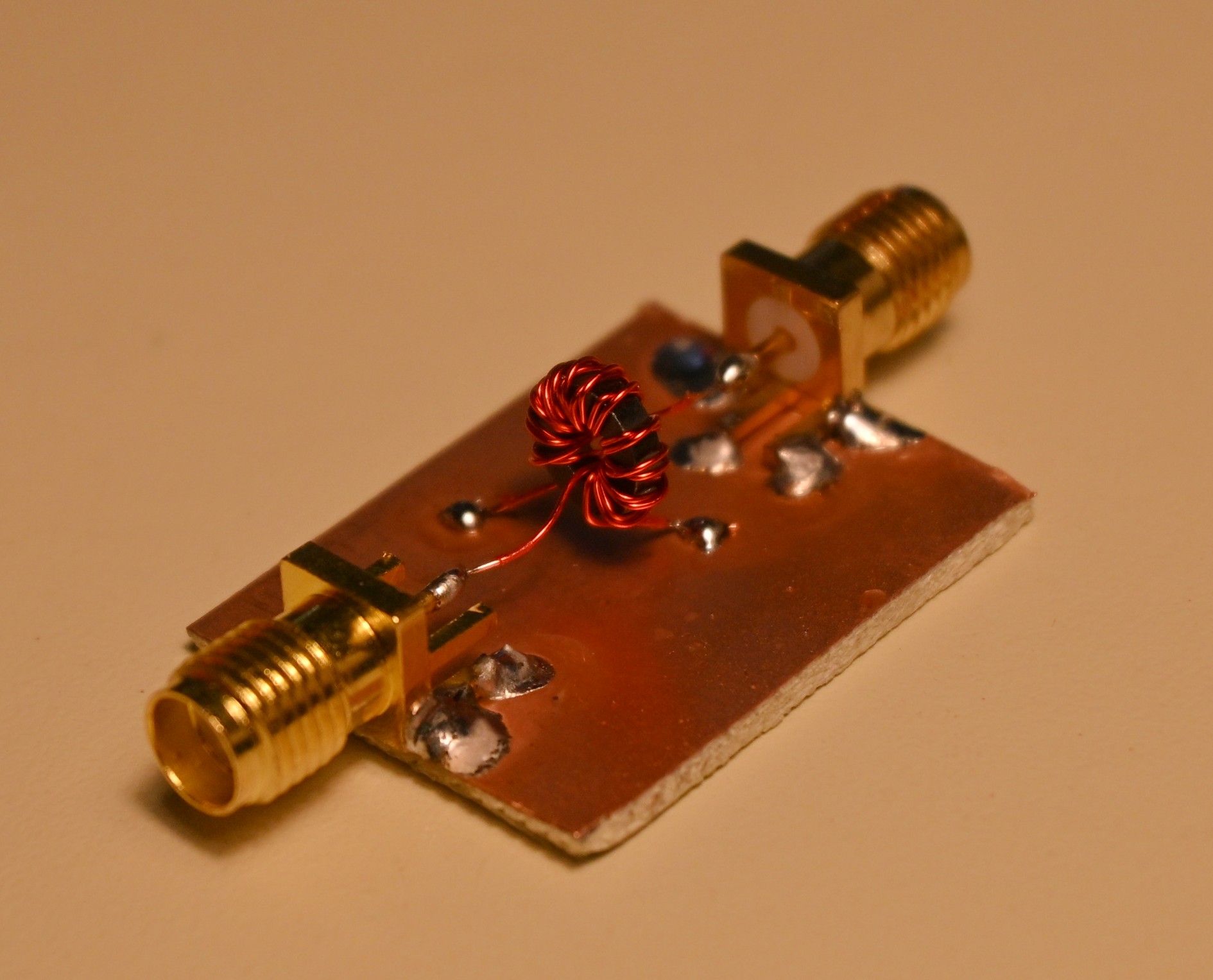
Shoot From The Hip 1:1 Transformer
How to Build a “Shoot From The Hip 1:1 Transformer”
Dang, another supply chain problem for the T41! This time it is the transformers used in the QSD2 and QSE2 modules. Back-ordered to the end of December!
https://www.digikey.com/en/products/detail/mini-circuits/ADT1-1/13928354
https://www.digikey.com/en/products/detail/mini-circuits/ADT4-6T/13927460
Not only are these parts not available, they are not cheap! I have been wanting to find a replacement for a while. Now I had the incentive to get it done!
The original T41 QSE and QSD were designed to use hand-wound transformers (or “baluns” if you prefer).
Those original transformers were wound on relatively large toroids:
https://toroids.info/FT50-43.php
https://toroids.info/T37-6.php
The MiniCircuits devices are wound on very small “binocular” type cores. Having a look at one of those things will make you wonder if a home-built duplicate is either really difficult to achieve or maybe impossible.
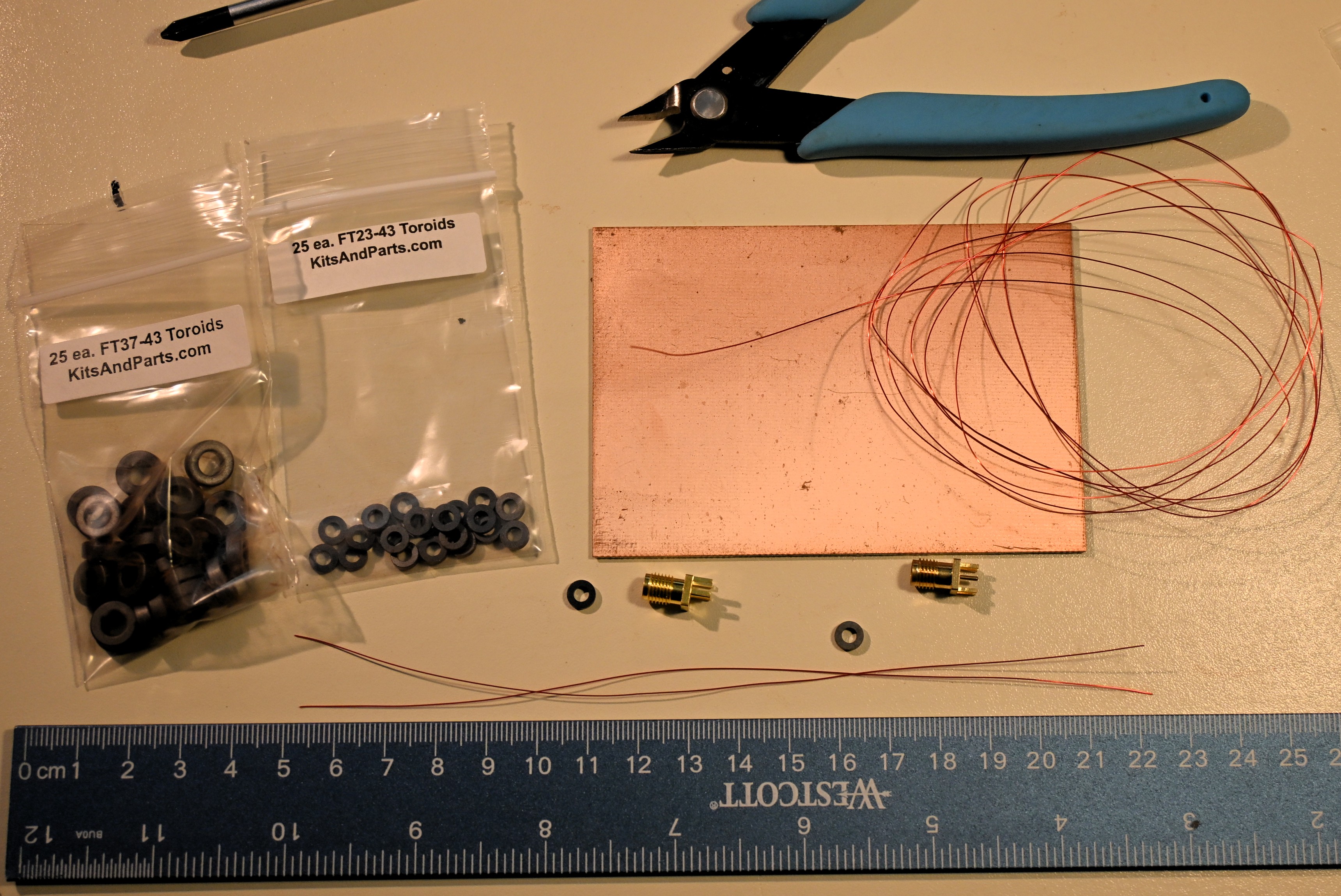
What if, instead of using a binocular core, use a smaller toroid? So let’s go over to the Kits and Parts site and find the smallest ferrite (#43 material) toroid:
https://toroids.info/FT23-43.php
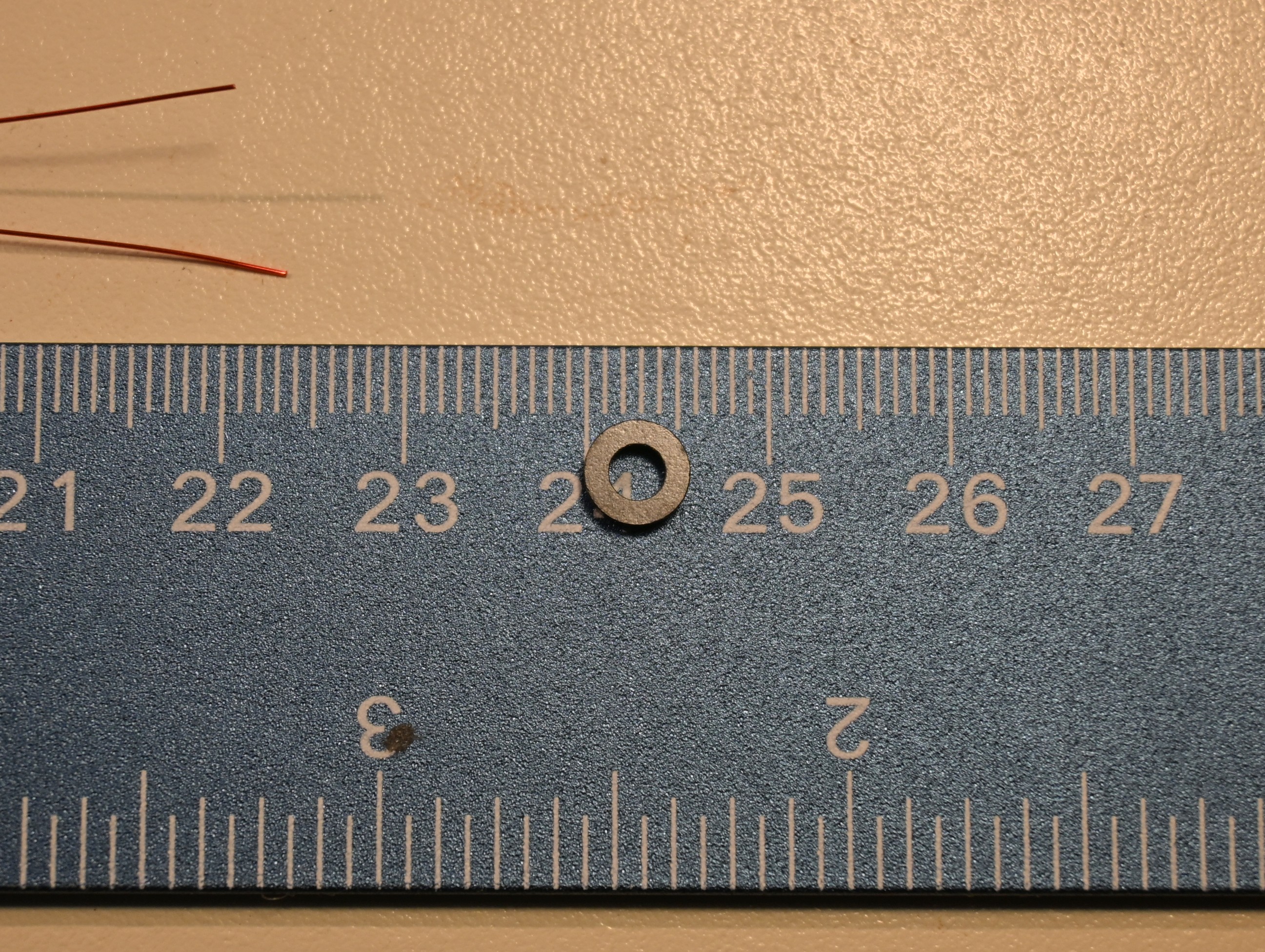
The outside diameter is 6mm so this thing is quite small! So I ordered the smallest possible quantity, which is 25 for $5. Just in case, I also ordered the next size up which is the FT37-43.
I also ordered a chunk of 28AWG and 30AWG enameled wire. The total cost of the order including shipping was $22.09. My lunch was more expensive than that! This is about the same as the cost of 3 or 4 of the MiniCircuits devices (depending on model). If things were to go as planned, I would have material for constructing 25 home-brewed substitutes. A pretty good cost savings! So let’s just call it $1 each for homebrew using free labor (me). And the supply chain problem is resolved, even better!
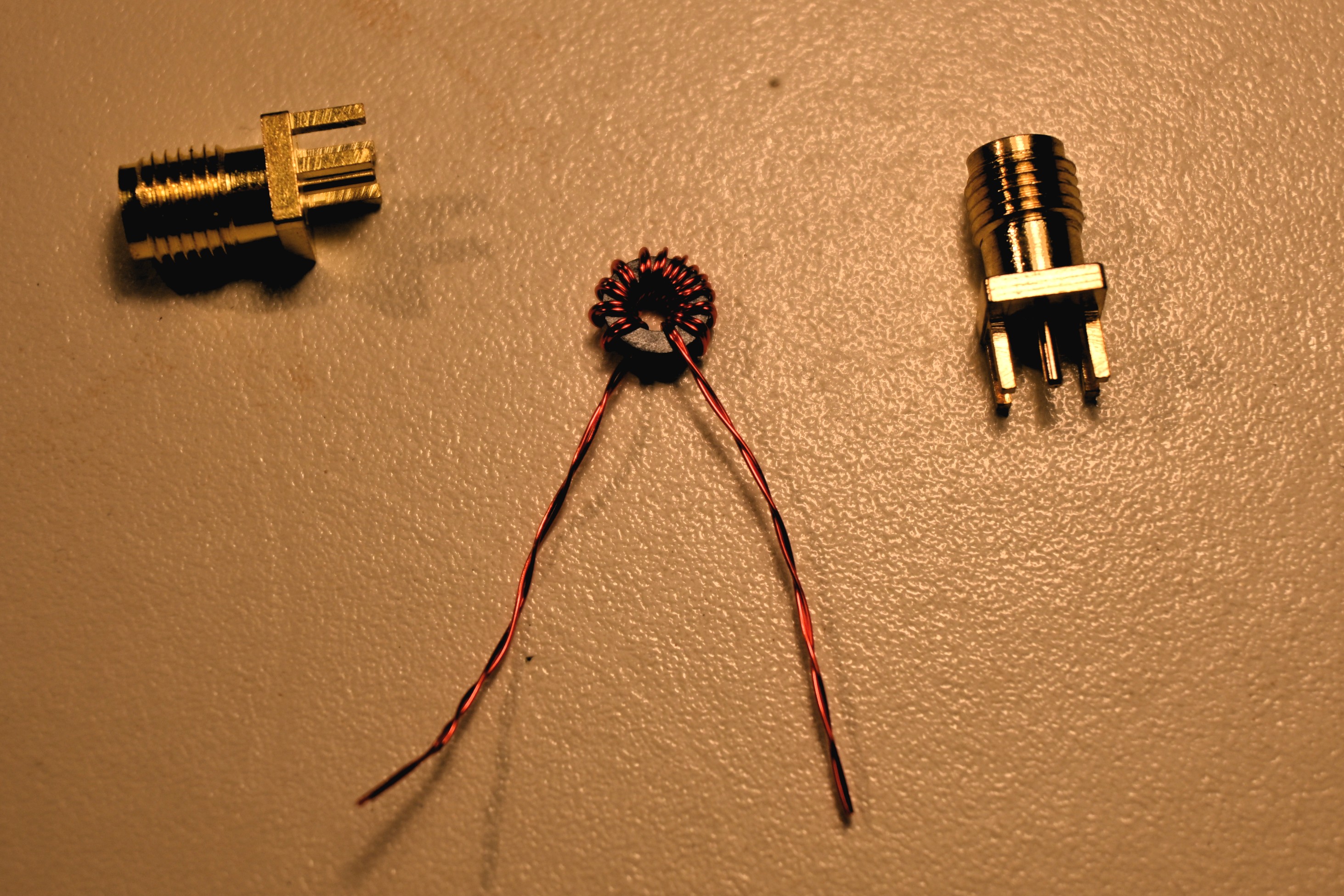
The transformer for the QSE2 is a simple 1:1 transformation without a center-tap on either winding. I will describe that one here and describe the transformer in the QSD2 in another post.
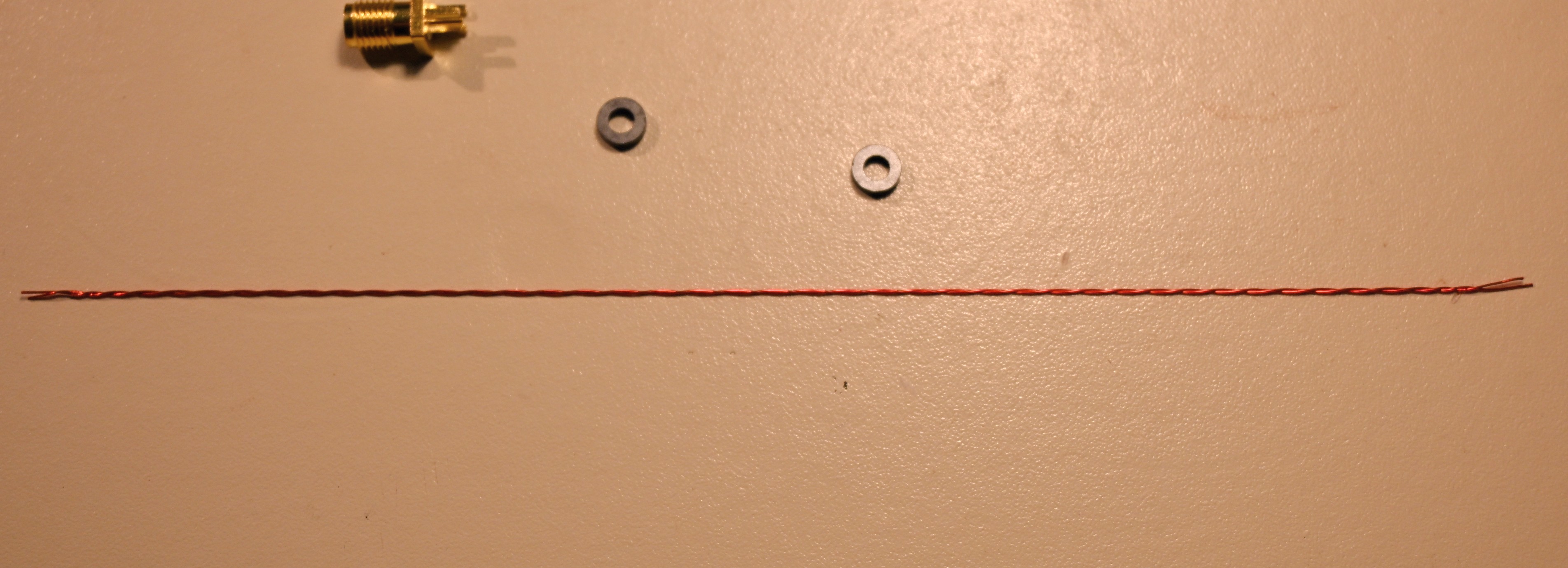
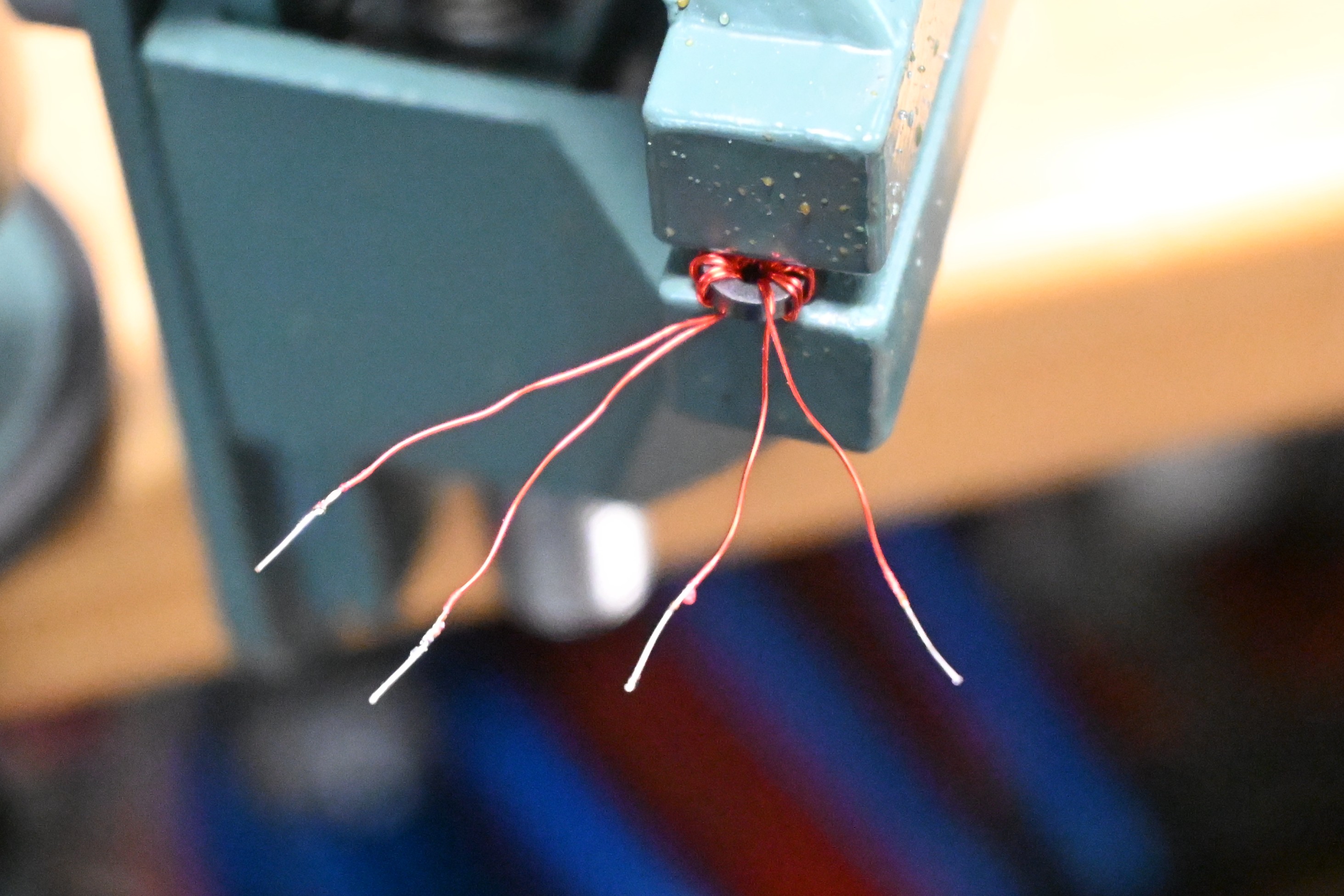
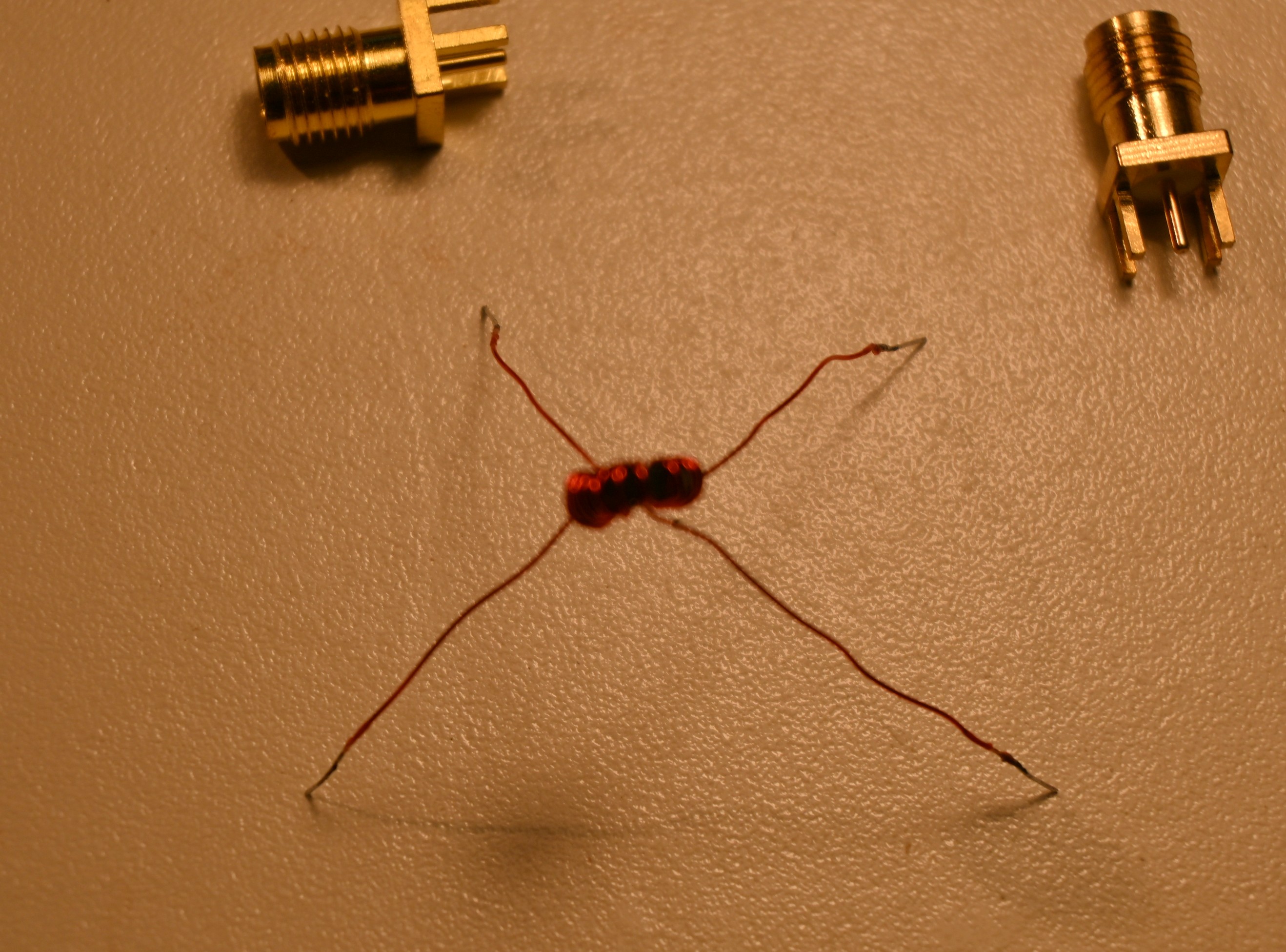
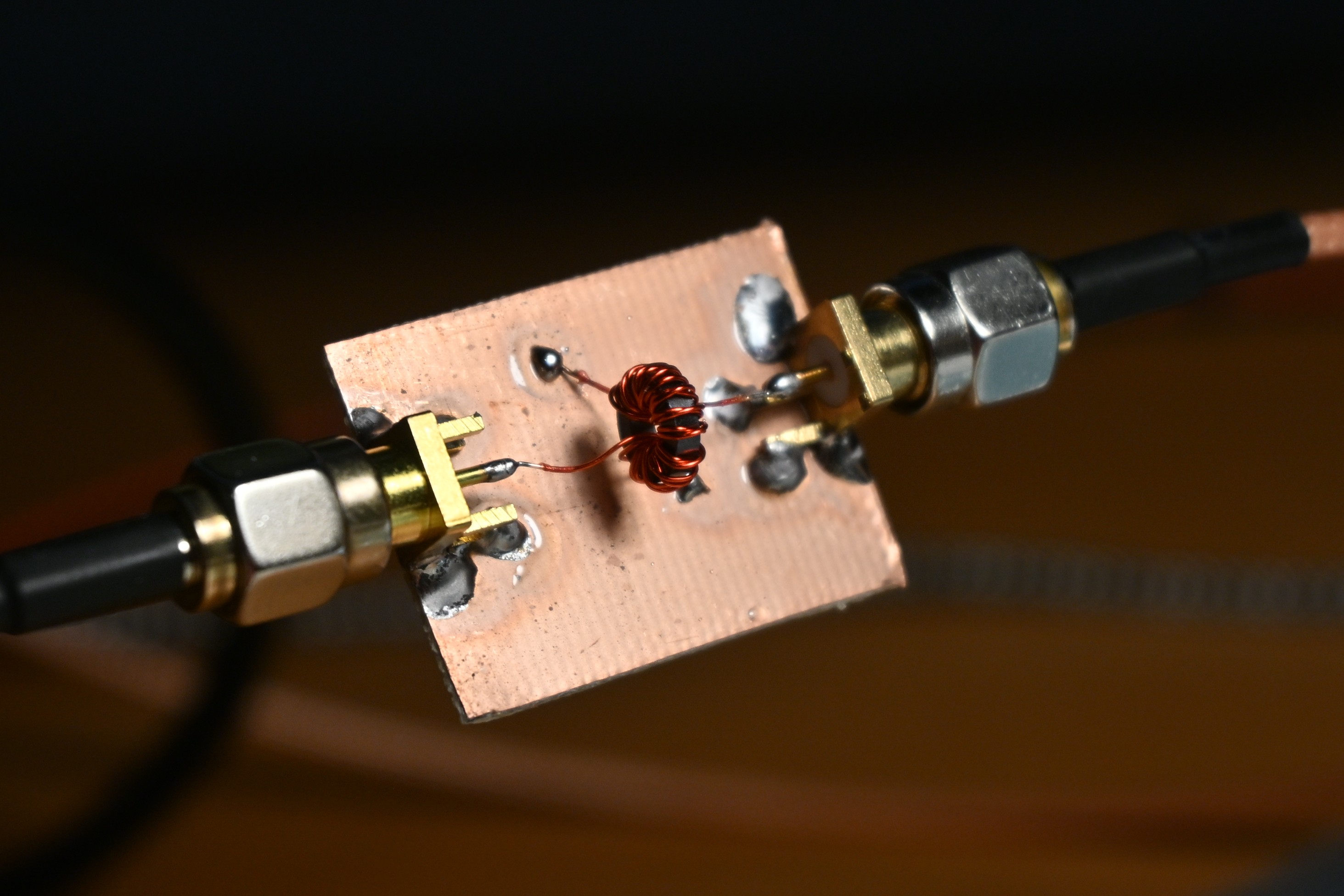
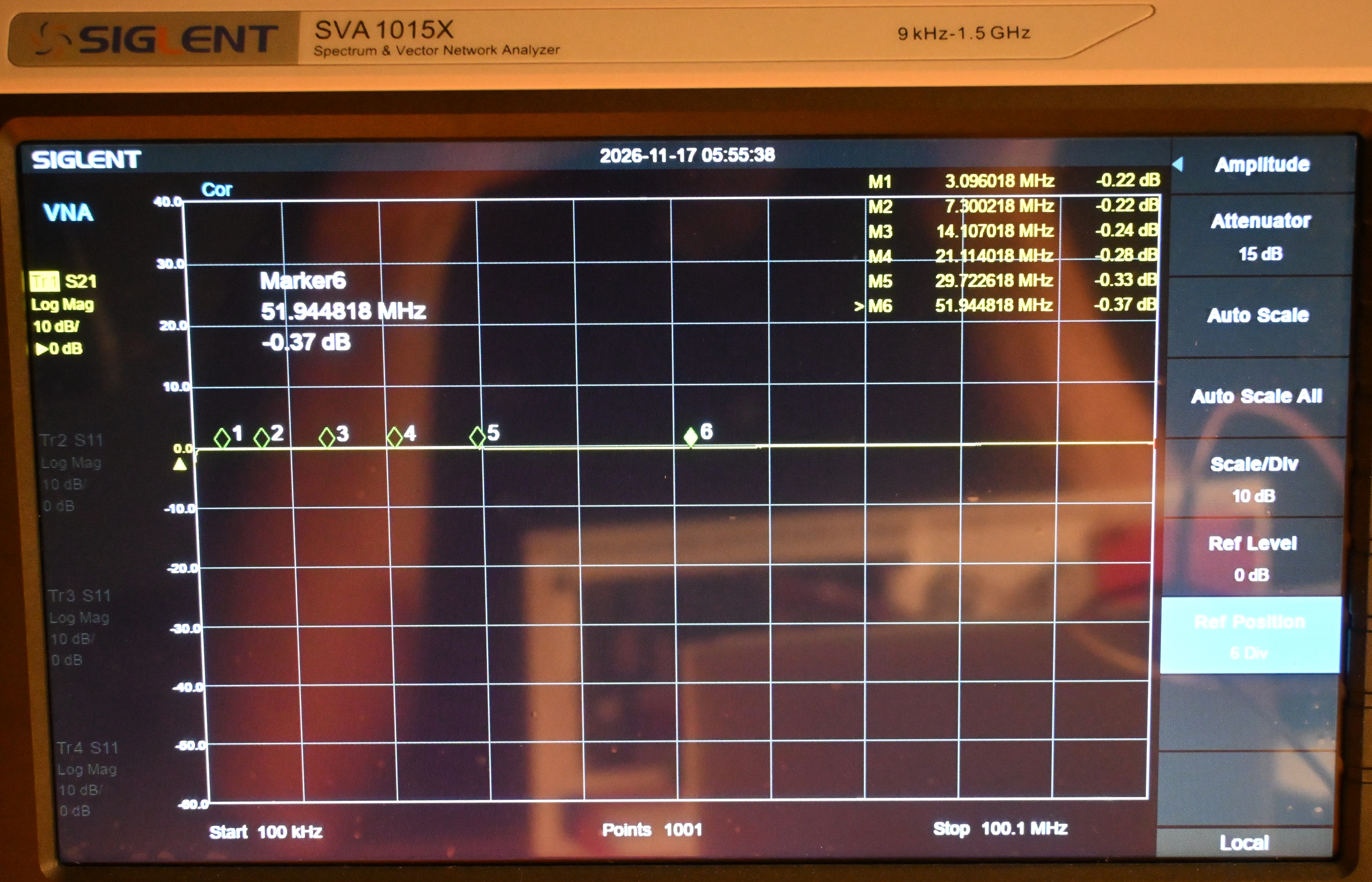
Photos follow with details in the captions (the photos are clickable for a closer view).
What Happened in Reality
I needed to complete a QSE2 prototype, but I had used all of the 1:1 MiniCircuits transformers in my stock. I had not performed the above test of the viability of the SFTH transformer. I simply built it and used it in the prototype. It worked!
So now I had to back up and test the darned thing. Well, it works and I am glad it did!
Next I will describe the SFTH transformer used in the QSD2. It is a little bit more difficult to build.
73 Greg KF5N